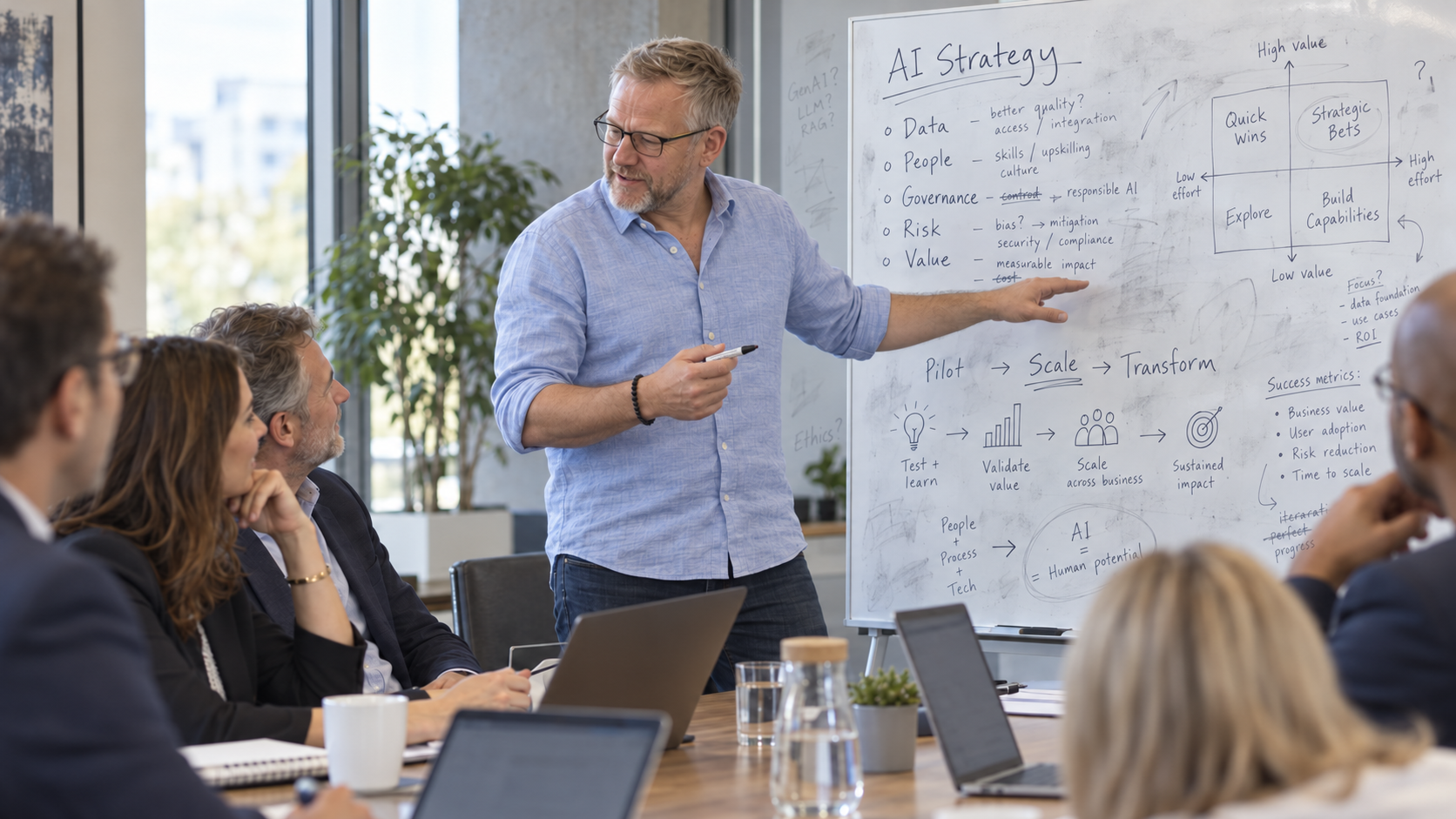
AI initiatives are often described in terms of the technology, the supplier or the potential saving. But value appears only when people can use a tool well within a changed process. That is why workforce readiness is not a secondary consideration; it is part of whether the initiative succeeds.
Adoption is more than a communications exercise
An impressive tool and a short demonstration can still make little difference to the work that matters. People may be unsure when to use it, what information is appropriate to enter, or how it fits into an already pressured day.
Good AI change management is not about persuading people that technology is inevitable. It is about helping the organisation make a practical transition: which tasks will change, where human judgement remains essential, and what support is needed to make the change work.
Start with the work, not the tool
Workforce readiness begins with a realistic view of the current process. Where does work take too long? Which tasks are repetitive? Where do people need better information, and where is experience or judgement most valuable? These questions show where AI might assist rather than simply adding another system to manage.
An AI-enabled summary, draft or recommendation may be useful, but it does not remove the need for someone to assess context, exercise judgement or take responsibility for the final action. Starting with the work makes the case for a defined outcome rather than a new tool.
Involve people early enough to matter
The colleagues closest to a process often understand its constraints best: where information is incomplete, a customer conversation needs nuance, or a workflow has informal but important checks. Involving them early helps the strategy reflect the reality of the work and identify opportunities likely to gain trust.
If you want to discuss this important topic further, contact me. The right approach should be proportionate to the people affected and the significance of the use case.
Make support specific to the change
Not every initiative needs a large training programme. But every material change needs people to understand what is expected: how to use a tool, when human review is required, and how to ask questions or report a concern. Managers need a clear route to hear what is working and when to escalate an issue.
Keep accountability visible
AI should not make responsibility harder to locate. If a system contributes to a recommendation, decision or customer interaction, the organisation should still be clear who owns the outcome. People need to know when to rely on their judgement, challenge an output, and raise a concern.
Use evidence to guide the next decision
Workforce readiness is not proven by attendance at a demonstration. Leadership should look for whether the changed process is being used, whether it improves the intended outcome, what colleagues find difficult and what needs adapting. The board should expect management to explain whether the organisation is ready to scale, redesign or stop.
People determine whether investment becomes value
AI can accelerate work, improve access to information and support better decisions. But those benefits depend on the organisation’s ability to redesign work thoughtfully, involve the right people and retain clear human accountability.
For a confidential discussion about AI change management, workforce readiness or an AI readiness assessment, contact me.